What We Treat
Migraine treatment at home
Modern care that meets you where you are.
Baseline Medical provides mobile medical care for non-urgent illness visits that come to you. When migraine is making it harder to recover, our team evaluates your symptoms at home and provides clinician-led support, including IV therapy when appropriate.
Quick Clinical Overview
Migraine is a neurologic condition that can cause intense headache pain, light sensitivity, sound sensitivity, nausea, and difficulty functioning. In-home care may be appropriate when symptoms are disruptive but not showing signs of emergency.
Symptom Impact
When migraine starts affecting function
Migraine becomes more disruptive when head pain, sensory sensitivity, nausea, or dizziness start limiting your ability to work, rest, think clearly, or recover with your usual routine at home.
Functional disruption
Light sensitivity, sound sensitivity, and head pain are making it difficult to work, concentrate, drive, rest, or get through normal daily responsibilities.
More severe than usual
The episode feels stronger, lasts longer, or is responding less than expected to your usual migraine management approach.
Home-care limits
Rest, hydration, a dark room, and your usual at-home measures are no longer enough, and you need clinician-guided next steps without defaulting to the ER.
How Baseline Care Helps
Clinical care at home for migraine when symptoms need evaluation
Baseline Medical delivers clinician-led migraine care at home when symptoms require in-person assessment, treatment guidance, and a clearer understanding of severity and next steps.

Baseline Care helps when
You need a clinical migraine assessment at home
Symptoms are more severe, lasting longer, or different from your usual pattern and require in-person evaluation.
You need clinician-guided symptom management
Treatment decisions are based on your symptoms, medical history, and overall presentation—not a one-size-fits-all approach.
You need clarity on next steps
Baseline Care helps determine what can be safely managed at home and when escalation to urgent or emergency care is appropriate.
Lower acuity than
The ER or hospital, where severe instability, emergency treatment, imaging, or hospital-level escalation may be needed.
More hands-on than
A telemedicine-only visit, because Baseline Medical brings an in-person RN assessment and structured mobile care workflow to you.
When Baseline Care is not appropriate
Some migraine symptoms require urgent or emergency evaluation. Seek immediate care for new or unusually severe headache, confusion, fainting, trouble speaking, weakness, vision changes, or symptoms that feel different from your typical migraine pattern.
If symptoms are worsening, not improving, or raising concern for a more serious neurologic or medical condition, emergency evaluation is the safer next step.
Care Model
How care is delivered
Baseline Care uses a structured Single Coordinated Visit to deliver medical care directly to you, where life happens.
Baseline Care Medical Assessment
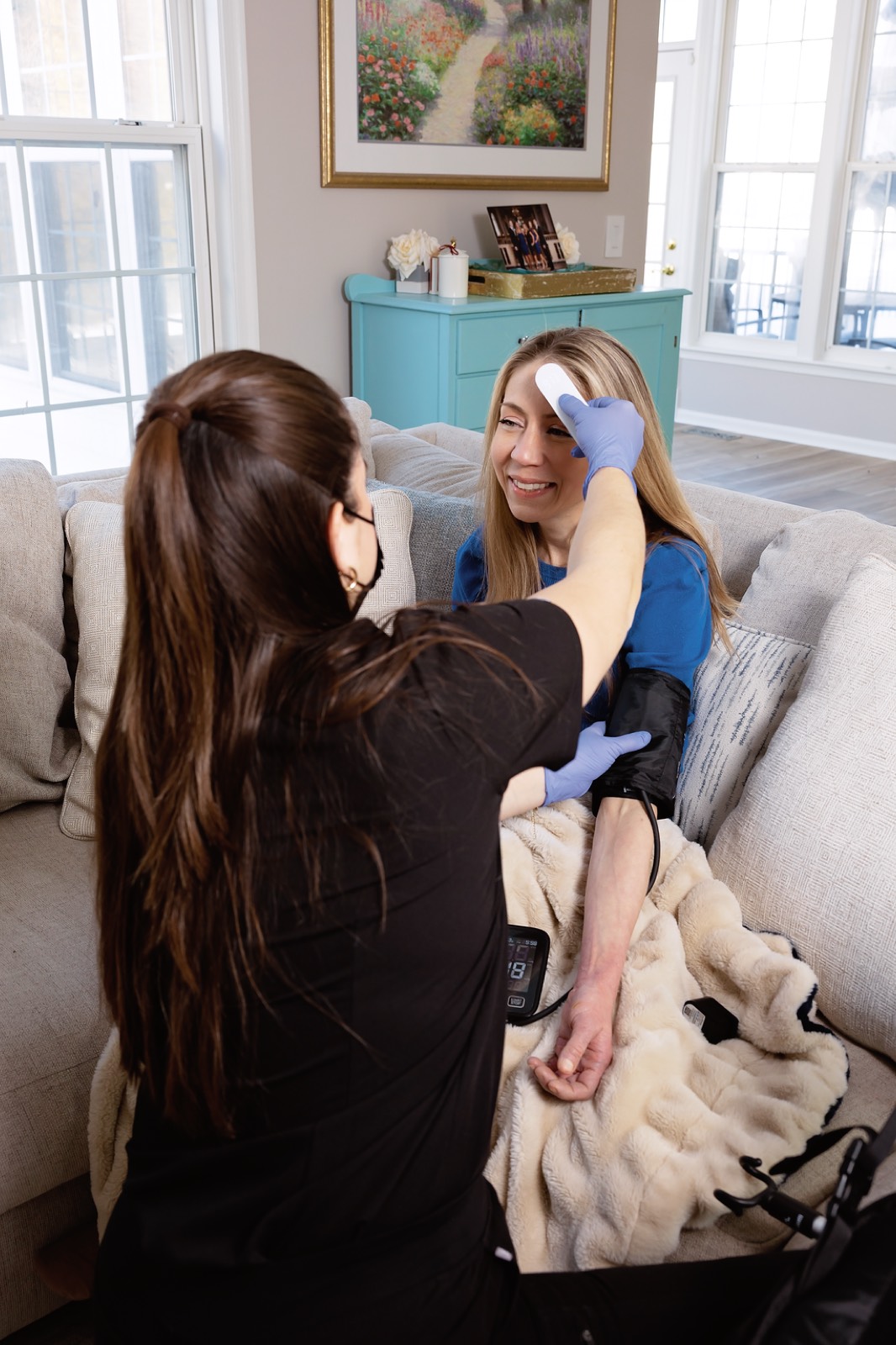
Our Registered Nurse comes to your home, hotel, or office and performs the in-person assessment, extensive vitals, and clinical workflow that starts the visit.
NP Joins Visit Virtually
Our Nurse Practitioner joins the visit on the provider device to advise on treatment planning, symptom support, and prescribing decisions during care.
RN Administered
Our Registered Nurse carries out clinician-ordered care during the visit to help you recover in the comfort of your home, hotel, office, or other location of your choosing.
Baseline Care
Treatment Approach
Migraine treatment should be guided by clinical severity, symptom pattern, response to usual measures, and overall presentation. During the visit, the Nurse Practitioner determines what is safe, appropriate, and most likely to help based on your symptoms, health history, and exam findings.
Symptom-directed migraine care
Treatment may focus on headache severity, nausea, sensory sensitivity, and overall functional disruption, depending on how the episode is presenting.
Medication and supportive treatment
When appropriate, the Nurse Practitioner may recommend or prescribe medication and other supportive treatment based on your migraine history, current symptoms, and clinical needs.
Hydration or IV support when appropriate
Hydration or IV-based support may be used in selected cases, but only when clinically appropriate and not as the default identity of migraine care.
Treatment is determined by our Nurse Practitioner when appropriate and may be administered by our Registered Nurse during the visit. The goal is safe, clinician-led migraine care at home—not a one-size-fits-all IV visit.
Related Care And Information
Continue exploring the Baseline Care path
Baseline Medical delivers non-urgent care where life happens. Explore how care works, where migraine fits in the broader condition system, and where IV therapy belongs within clinician-led treatment decisions.
Care options
View all conditionsRelated conditions
FAQ
Common questions about migraine care
Clear answers about symptoms, escalation, treatment, and how a mobile illness visit works.
Book illness care for migraine support
Baseline Medical brings non-urgent illness care to you. If migraine is slowing recovery, our team can evaluate your symptoms at home and determine the most appropriate next step.