What We Treat
Fatigue Treatment at Home
Modern care that meets you where you are.
Baseline Medical provides mobile medical care for non-urgent illness visits that come to you. When fatigue, low energy, or exhaustion is making it harder to function, focus, or recover, our team evaluates your symptoms at home and provides clinician-led support with recovery-focused care when appropriate.
Quick Clinical Overview
Fatigue can happen with illness, dehydration, poor sleep, stress, infection, or other medical issues. Treatment may be appropriate when low energy is persistent, daily function is affected, or recovery is not improving with rest at home.
Symptom Impact
When fatigue starts affecting daily life
Fatigue can become more disruptive when low energy, weakness, or poor concentration starts affecting recovery, daily tasks, or the ability to function normally at home.
Mild fatigue
Low energy, reduced stamina, or slower recovery are becoming more noticeable, but you are still able to manage basic daily activities.
Moderate fatigue
Persistent fatigue, weakness, or trouble concentrating is starting to interfere with work, daily function, or recovery from illness.
Severe fatigue
Exhaustion, worsening weakness, dizziness, or overlapping illness symptoms are making it harder to function safely, and you need clearer clinical guidance.
How Baseline Care Helps
Clinical care at home for fatigue that needs more than rest alone
Baseline Medical delivers Baseline Care for non-urgent fatigue when symptoms need in-person assessment, treatment guidance, and a clearer recovery plan at home.

Baseline Care helps when
You need clinician-led fatigue evaluation at home
Symptoms are persistent, affecting function, or unclear enough that telemedicine alone may not be enough.
You may need symptom support, hydration support, or recovery guidance
Care starts with medical assessment first, then treatment decisions are made based on the full clinical picture.
You need a clearer next step without jumping straight to the ER
Baseline Care helps define what can be managed at home and when higher-acuity care is the safer next step.
Lower acuity than
The ER or hospital, where severe instability, emergency treatment, imaging, or hospital-level escalation may be needed.
More hands-on than
A telemedicine-only visit, because Baseline Medical brings an in-person RN assessment and structured mobile care workflow to you.
When Baseline Care is not appropriate
Some fatigue symptoms need urgent in-person escalation. Seek urgent care or the emergency room for severe confusion, fainting, chest pain, trouble breathing, severe abdominal pain, suspected shock, worsening lethargy, or symptoms that feel rapidly unstable.
If you are experiencing severe weakness, confusion, fainting, chest pain, or trouble breathing, or symptoms that feel rapidly worsening or unstable and may need emergency testing, imaging, or hospital-level treatment, higher-acuity care is the safer next step.
Care Model
How care is delivered
Baseline Care uses a structured Single Coordinated Visit to deliver medical care directly to you, where life happens.
Baseline Care Medical Assessment
A Registered Nurse comes to your home, hotel, or office and performs the in-person assessment, extensive vitals, and clinical workflow that starts the visit.
NP Joins Visit Virtually
A Nurse Practitioner joins the visit on the provider device to advise on treatment planning, symptom support, and prescribing decisions during care.
RN Administered
The Registered Nurse carries out Nurse Practitioner orders during the visit to help you recover in the comfort of your home, hotel, office, or other location of your choosing.
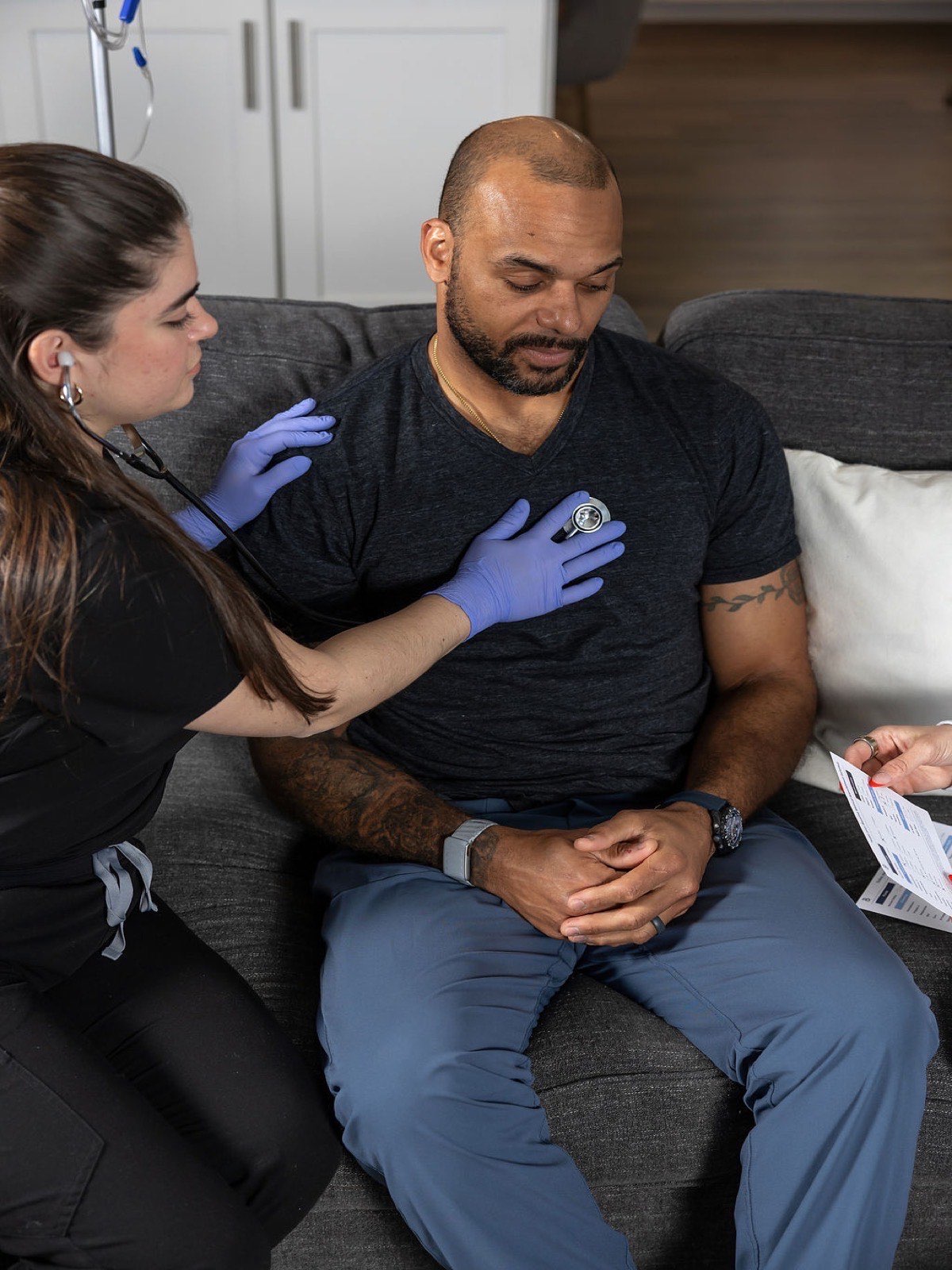
Baseline Care
Treatment Approach
When fatigue or low energy is affecting daily function and recovery, patients often seek relief, but care should still be guided by what is medically appropriate. During the visit, the Nurse Practitioner works with you to identify what is safe, appropriate, and most likely to help based on your symptoms, health history, and overall clinical picture.
Hydration and recovery support
Hydration support may be used when poor intake, dehydration, recent illness, or reduced endurance is contributing to fatigue or slowing recovery.
Symptom support and clinical treatment
When appropriate, the Nurse Practitioner may recommend symptom-directed treatment, medication support, or other recovery-focused therapies based on the likely cause and severity of symptoms.
Clinician-directed recovery plan
Your care plan may include clinician-directed treatment, home-care guidance, escalation recommendations, or additional support ordered during the visit when medically appropriate.
Treatment is ordered by the Nurse Practitioner when appropriate and may be administered by the Registered Nurse during the visit. Supportive care is guided by the clinical picture, not by a preset menu of treatments.
Related Care And Information
Continue exploring the Baseline Care path
Baseline Medical delivers non-urgent care where life happens. Explore how care works, where fatigue fits in the broader condition system, and which related conditions may overlap with low energy and recovery concerns.
Care options
View all conditionsRelated conditions
FAQ
Common questions about fatigue care
Clear answers about symptoms, escalation, treatment, and how a mobile illness visit works.
Book care for fatigue and low energy support
Baseline Medical brings non-urgent illness care to you. If fatigue, low energy, or exhaustion is affecting daily function or slowing recovery, our team can evaluate your symptoms at home and determine the most appropriate next step.